

By using this site, you agree to the Privacy Policy and Terms of Use.
Accept

Your #1 guide to start a business and grow it the right way…

  • Home
  • Startups
  • Start A Business
    • Business Plans
    • Branding
    • Business Ideas
    • Business Models
    • Fundraising
  • Growing a Business
  • Funding
  • More
    • Tax Preparation
    • Leadership
    • Marketing
Subscribe
Aa
BrandiaryBrandiary
  • Startups
  • Start A Business
  • Growing a Business
  • Funding
  • Leadership
  • Marketing
  • Tax Preparation
Search
  • Home
  • Startups
  • Start A Business
    • Business Plans
    • Branding
    • Business Ideas
    • Business Models
    • Fundraising
  • Growing a Business
  • Funding
  • More
    • Tax Preparation
    • Leadership
    • Marketing
Made by ThemeRuby using the Foxiz theme Powered by WordPress
Brandiary > Startups > Don’t Ask Dumb Robots If AI Will Destroy Humanity

Don’t Ask Dumb Robots If AI Will Destroy Humanity

News Room By News Room July 21, 2023 3 Min Read
Share

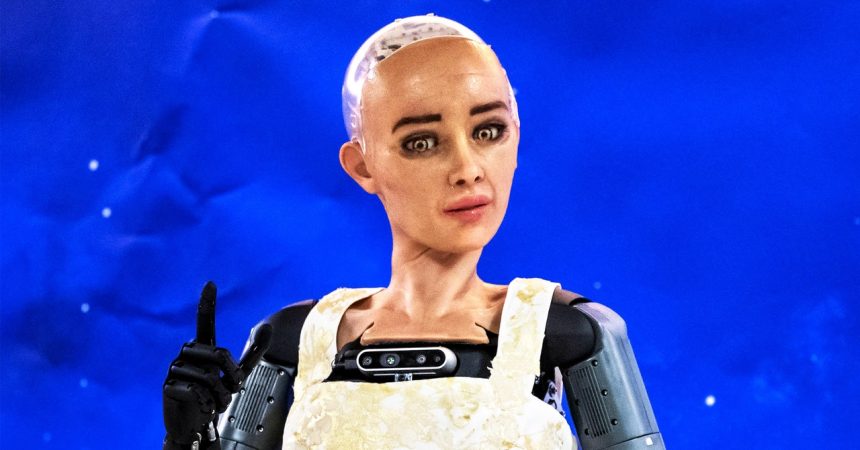
Hanson and I talked about the idea of adding real intelligence to these evocative machines. Ben Goertzel, a well-known AI researcher and the CEO of SingularityNET, leads an effort to apply advances in machine learning to the software inside Hanson’s robots that allows them to respond to human speech.

The AI behind Sophia can sometimes provide passable responses, but the technology isn’t nearly as advanced as a system like GPT-4, which powers the most advanced version of ChatGPT and cost more than $100 million to create. And of course even ChatGPT and other cutting-edge AI programs cannot sensibly answer questions about the future of AI. It may be best to think of them as preternaturally knowledgeable and gifted mimics that, although capable of surprisingly sophisticated reasoning, are deeply flawed and have only a limited “knowledge” of the world.

Sophia and company’s misleading “interviews” in Geneva are a reminder of how anthropomorphizing AI systems can lead us astray. The history of AI is littered with examples of humans overextrapolating from new advances in the field.

In 1958, at the dawn of artificial intelligence, The New York Times wrote about one of the first machine learning systems, a crude artificial neural network developed for the US Navy by Frank Rosenblatt, a Cornell psychologist. “The Navy revealed the embryo of an electronic computer today that it expects will be able to walk, talk, see, write, reproduce itself and be conscious of its existence,” the Times reported—a bold statement about a circuit capable of learning to spot patterns in 400 pixels.

If you look back at the coverage of IBM’s chess-playing Deep Blue, DeepMind’s champion Go player AlphaGo, and many of the past decade’s leaps in deep learning—which are directly descended from Rosenblatt’s machine—you’ll see plenty of the same: people taking each advance as if it were a sign of some deeper, more humanlike intelligence.

That’s not to say that these projects—or even the creation of Sophia—were not remarkable feats, or potentially steps toward more intelligent machines. But being clear-eyed about the capabilities of AI systems is important when it comes to gauging progress of this powerful technology. To make sense of AI advances, the least we can do is stop asking animatronic puppets silly questions.

Read the full article here

News Room July 21, 2023 July 21, 2023
Share This Article
Facebook Twitter Copy Link Print
Previous Article Your Guide to Gaining a Competitive Edge and Succeeding as an Entrepreneur Over the Next 5 Years
Next Article What Franchising Can Teach Companies About Remote Work Culture
Leave a comment Leave a comment

Leave a Reply Cancel reply

Your email address will not be published. Required fields are marked *

Wake up with our popular morning roundup of the day's top startup and business stories

Stay Updated

Get the latest headlines, discounts for the military community, and guides to maximizing your benefits
Subscribe

Top Picks

Why Coca-Cola made March Madness a moment for BodyArmor
March 15, 2026
How Togethxr helped change women’s sports in its first five years
March 14, 2026
An AI avatar of Andy Cohen will start name-dropping brands on Peacock this summer
March 13, 2026
In a tougher market, the auto industry may need to change EV marketing messages
March 12, 2026
Inside Major League Soccer’s World Cup year marketing playbook
March 11, 2026

You Might Also Like

Part 1. Key concepts, glossary of terms.

Startups

Using ‘Daikandou Management’ In The AI Era

Startups

The Important Initiative For Real Digital Marketing Results

Startups

Six Secrets Of Maintaining Momentum After An Acquisition

Startups

© 2023 Brandiary. All Rights Reserved.

Helpful Links

  • Privacy Policy
  • Terms of use
  • Press Release
  • Advertise
  • Contact

Resources

  • Start A Business
  • Funding
  • Growing a Business
  • Leadership
  • Marketing

Popuplar

ESPN never had one official brand identity—until now
Coworking with Andrea Bendzick
Can humans and robots coexist in harmony? TD Bank thinks so

We provide daily business and startup news, benefits information, and how to grow your small business, follow us now to get the news that matters to you.

Welcome Back!

Sign in to your account

Lost your password?