

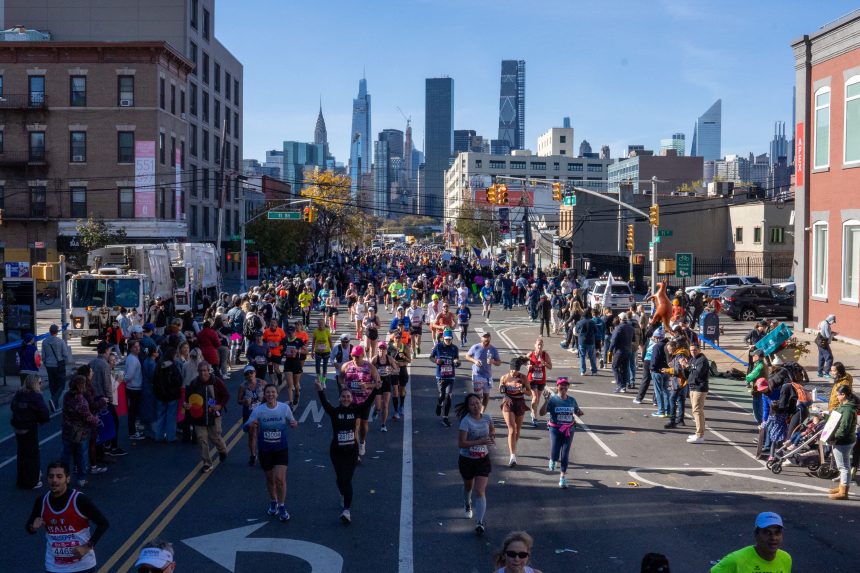
With the New York City Marathon on Sunday, pavement-pounding is set to reach a high throughout the city. But during weekend mornings in major cities around the country, you’d be hard-pressed to avoid crowds of runners getting their steps in together.
“If I’m in San Francisco any weekend morning, I cannot believe the number of running clubs that I’m seeing,” said Brooke Donberg, director of partnerships and activation at Clif Bar, which has sponsored multiple running events this year.
The rising popularity of run clubs has helped transform the sport, once seen as a solitary act, into a social and social-media-ready activity. There are run clubs for dating, run clubs hosted by DJs like Diplo and John Summit, and run clubs specifically for marathons; Carey Pinkowski, executive race director of the Chicago Marathon, said he saw “hundreds of runners” out and about on weekend mornings in the lead-up to the race earlier this month.
As online and IRL communities continue to crop up around running, marketers are taking note, looking for ways to lace up their own metaphorical sneakers and hit the ground, well, running.
“I think a lot of brands are seeing the opportunity, certainly the bigger ones, of ways that they can tap into quite a diverse group of people in terms of both runners and spectators,” Charlie Wade, chief client officer at VML Live and a runner himself who’s done work for clients around several races, told Marketing Brew.
Full corrals
Running gained significant steam during the pandemic. The sport “has always been popular, but niche,” and when gyms closed, many people looking to stay active found they had few other options, Christine Burke, the chief commercial officer for New York Road Runners (NYRR), the nonprofit behind the NYC Marathon, said.
That has led to surges in race sign-ups. While most NYRR races sold out about a month in advance in 2019, new races now typically fill up in a few hours, Burke said. The Boston 5K, which is held on Boston Marathon weekend, was at capacity in 21 minutes this year, according to Scott Stover, CMO of the Boston Athletic Association (BAA), the nonprofit that hosts the Boston Marathon.
“We’re seeing demand that we just can’t meet because of the restriction in terms of the size of our field,” he said.
That surge in participation is translating to sponsor interest, Burke said. A few weeks ahead of the New York City Marathon, floor space at the marathon expo was “essentially sold out,” she said, and this year, the marathon has six new official partners, including three non-endemic brands.
“We’re seeing more and more interest in the non-endemic space, with brands seeing the running community as a trend in overall health and wellness, and wanting to find meaningful and authentic ways to engage,” Burke said.
Join the club
Some in the running space give run clubs partial credit for increasing interest in racing among participants and sponsors alike. Many running sponsors are drawn to the sport because of the extended timelines for connecting with athletes, but marathon sponsorships in particular typically hinge on one race day; run clubs can offer a “timeline extension” to “complement the type of big, tentpole investment” marketers make in official partnerships, said Zack Sugarman, SVP at Two Circles, which counts Ironman as a client and works with brands on endurance and marathon partnerships.
Sports brands including Clif Bar and Nike are already involved with run clubs, but many marketers are still trying to figure out how to best get a foot in the door, according to Stephanie Arpaia, VP of brand marketing at Excel Sports Management, which has worked on running activations for clients including the Hospital for Special Surgery (HSS) and Clif Bar.
Bank of America, the presenting sponsor of the Boston Marathon and title sponsor of the Chicago Marathon, is “still working through” ideas to supplement those activations, according to Brad Ross, who leads global marketing partnerships for the bank. The marketing team at Citizens, which became the official bank of NYRR in 2023, has also “started to think about” run clubs, Head of Marketing Lori Dillon said.
From start to finish
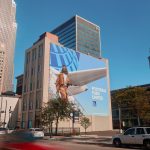
One surefire way that marathon sponsors are engaging with runners and race spectators is through branded cheer zones and other signage lining the courses on race days. Nike, which hosts its own races and has official partnerships with marathons like Portland and Chicago, places cheer zones and “cheeky” billboards where runners might need a boost the most, Seema Simmons, VP and general manager of Nike Running for North America, told us. At the Chicago Marathon, one bright red billboard along the course read “Shut up, brain”; at last year’s New York City Marathon, signage at the Staten Island Ferry, which runners used to get to the start line, read “Running is awful. I love it.”
HSS, which has been a partner of NYRR since 2009, has shown up at races with cheer zones, hydration zones, and billboards, according to Jess Lefkowitz, an assistant VP who works on the hospital’s sports partnerships. The activations are meant to increase brand awareness and trust, and HSS is seeing those results, she said.
Get marketing news you’ll actually want to read
Marketing Brew informs marketing pros of the latest on brand strategy, social media, and ad tech via our weekday newsletter, virtual events, marketing conferences, and digital guides.
“I don’t see us going anywhere anytime soon,” Lefkowitz said. “It’s continued to help us build equity in the wellness and performance spaces.”
Awareness is also the goal for Citizens, Dillon said, and the brand clocked a 14% increase in consideration among New York-area runners from before the marathon in 2023 to after the marathon in 2024.
“It blew me away, quite frankly, how [much] that moved,” Dillon said. “What that meant was you couldn’t miss us.”
For many brands, charities are also a key component of marathon sponsorships: HSS and Citizens both work with NYRR to honor runners who race on behalf of charities and community members making an impact, and for Bank of America, being associated with fundraising is a significant benefit of its marathon sponsorship, Ross said.
“It goes beyond just the activation on the ground, which we do, which is table stakes,” Ross said. “It goes beyond just showing up with our logo…The ability to drive and raise revenue and some money for the charities is a big piece of the pie.”
The next mile
Foot races give marketers access to captive audiences who are actually participating in the sport, as well as millions of spectators, making racing sponsorships fairly unique in the sports sponsorship space. But marathons may still lag behind some other sports when it comes to reaching TV audiences
“We’re still not quite there yet,” Arpaia said. “We’re starting to see some growth there as far as running events picking up more cultural mindshare or just being more relevant in culture…I’m looking out for, in the next five, 10, years, do we now start to open up an even a bigger lens as far as reaching more consumers that way?”
Reach isn’t always the biggest KPI for running sponsors, making TV viewership less of an issue for some brands. Simmons said her team at Nike is more concerned with creating products and experiences designed for runners, given the brand’s deep roots in the sport. For Bank of America, running is about the “ability to go very deep” with a community, Ross said; the brand can get big reach elsewhere, like with its FIFA World Cup sponsorship, he added.
Even without the level of TV reach traditionally associated with major sports, demand for in-person participation seems to be enough to fuel growing interest in running sponsorships, and the need for speed (or just endurance) is showing no signs of slowing down.
“I would carry bibs in my pocket [on] race morning and hand them out,” Pinkowski said. “Now I get stopped in the grocery store and asked about access to the race.”
Update 10/30/25: This story has been updated with additional details about brands honoring runners.
Read the full article here